
In the world of probiotics, many people are familiar with bacterial groups such as Lactobacillus and Bifidobacterium. However, there is another group of probiotics with distinctly different characteristics: Bacillus, a group of bacteria capable of forming spores.
One of the most extensively clinically studied strains is Bacillus coagulans SNZ1969®, which was first isolated from green malt in 1949 by a Japanese physician, Dr. Nakayama.
Bacillus coagulans SNZ1969® has the distinctive ability to exist in the form of a spore, a structure that is significantly more resistant to environmental conditions than bacterial cells in the vegetative cell form (living probiotic cells that do not form spores).
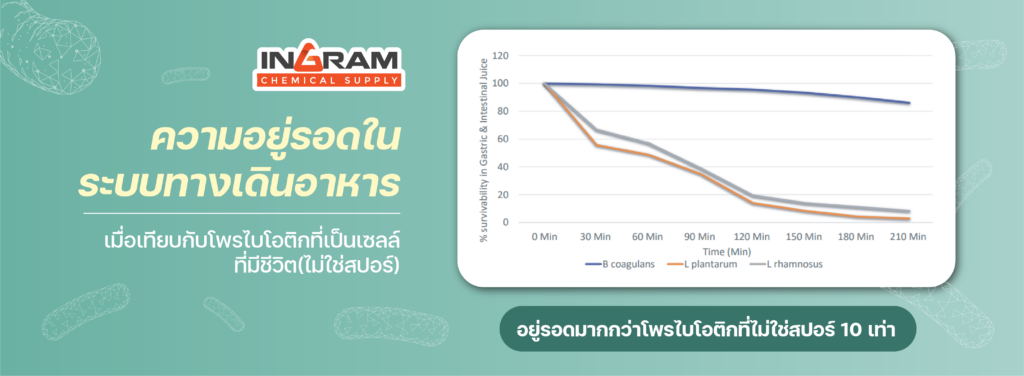
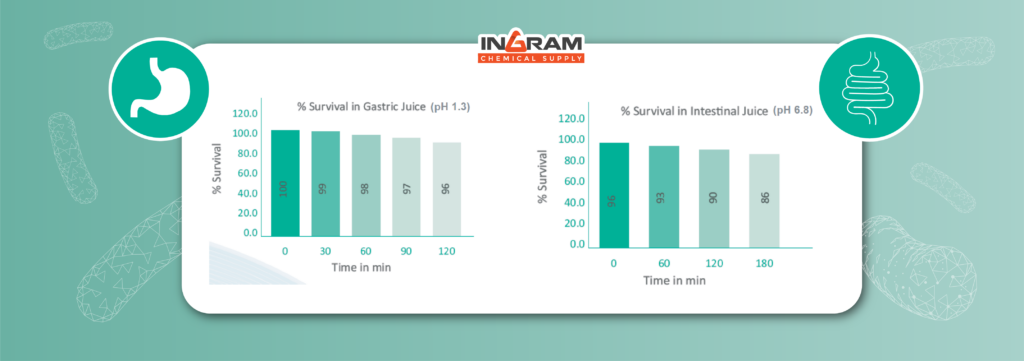
Bacillus coagulans SNZ1969® can survive in the gastrointestinal tract at levels up to 10 times higher than non-spore-forming probiotics.
Imagine conventional probiotics as living cells that have to travel through various challenging environments in the gastrointestinal tract. In contrast, Bacillus coagulans SNZ1969® exists in a spore form, a highly resistant structure that acts like an “armored knight,” allowing it to survive the acidic environment of the stomach and reach the intestines, where it can grow and function effectively.
In addition to its ability to survive the gastrointestinal tract, this “armored knight” also demonstrates excellent heat resistance. This characteristic helps overcome one of the traditional limitations of using probiotics in production lines involving pasteurization or UHT processing, where conventional probiotic strains generally have very low survival rates during such heat treatments.
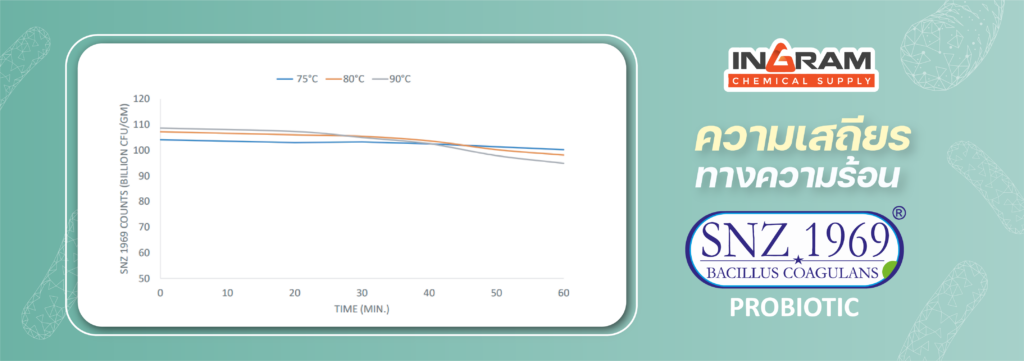
Its excellent heat resistance also contributes to longer shelf life and good performance during manufacturing processes. It remains effective under a wide range of storage and processing conditions, making it particularly suitable for food formulations, dietary supplements, and pharmaceutical products.
However, what makes Bacillus coagulans SNZ1969® particularly interesting is not only the durability of its spores and its heat resistance. More importantly, it has been directly studied in humans, with more than 30 clinical studies covering a wide range of health areas, particularly:
In addition, Bacillus coagulans SNZ1969® has a long history of safe use spanning more than 50 years. It is internationally recognized and meets global standards, including Non-GMO certification, approval from Health Canada, and Health Claims notification with FSANZ. Its customers span more than 40 countries worldwide.
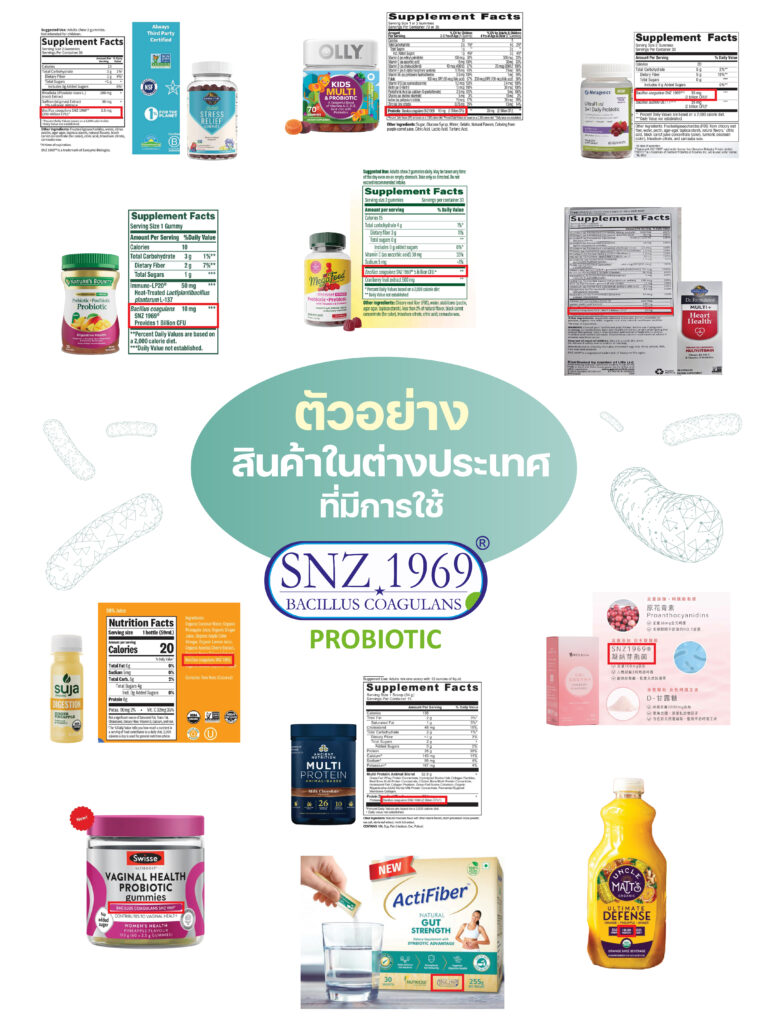
The following are examples of products in international markets that incorporate Bacillus coagulans SNZ1969®.